
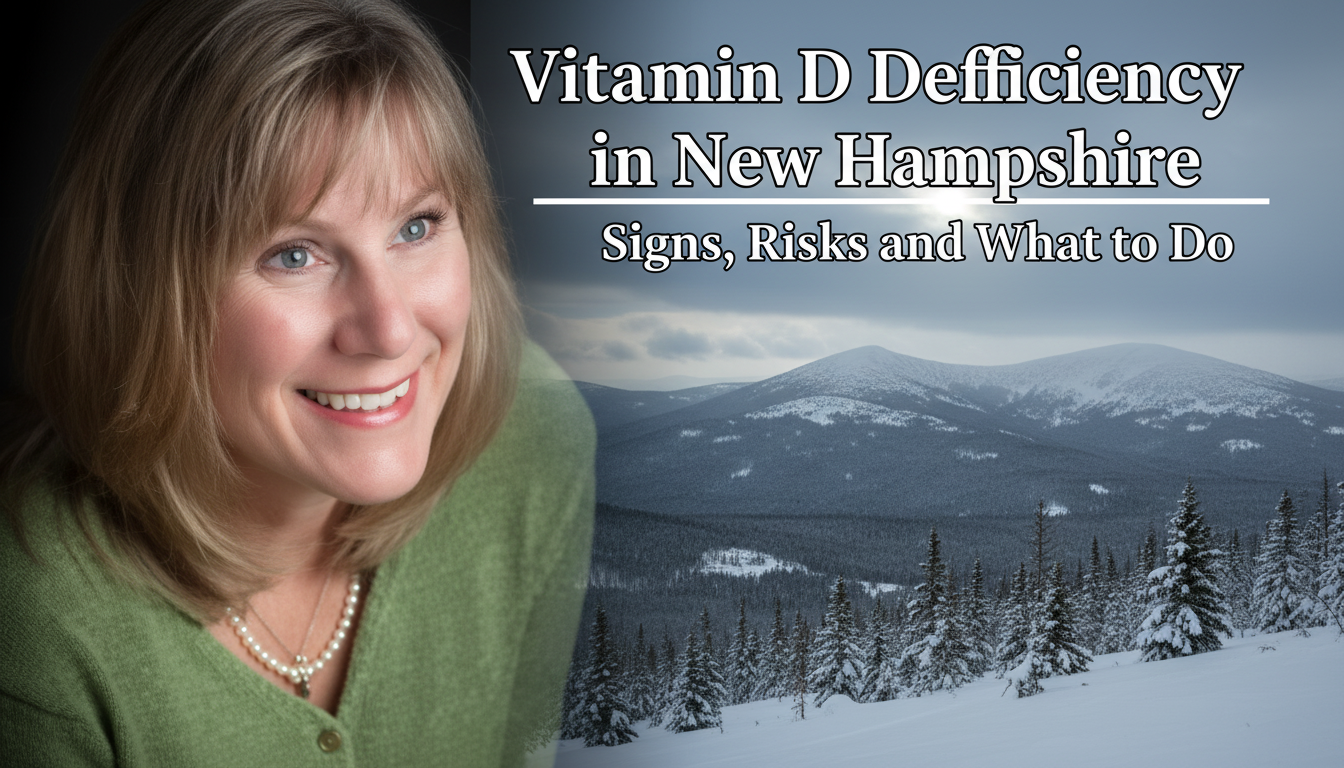
If you live in New Hampshire and feel unusually tired, achy, or low in mood during the colder months, vitamin D deficiency could be playing a bigger role than you realize. As a registered dietitian serving the Seacoast NH area, it is one of the most common nutritional issues I see in my clients year round, and one of the most overlooked.
Here is what you need to know about why New Hampshire residents are especially vulnerable, what the warning signs look like, and what you can actually do about it.
Why New Hampshire Is a High-Risk State for Vitamin D Deficiency
Vitamin D is primarily made in your skin when it is exposed to UVB rays from the sun. The problem for anyone living at a northern latitude, and New Hampshire sits at approximately 43 to 45 degrees north, is that the angle of the sun from roughly November through March is too low for your skin to produce meaningful amounts of vitamin D at all.
Research confirms that in cities at latitudes comparable to New Hampshire, the skin essentially cannot synthesize vitamin D during the winter months. That gives Seacoast NH residents at least four to five months every year where sun exposure alone cannot meet their vitamin D needs, no matter how much time they spend outdoors.
Add to that the reality of cold winters that keep people bundled up and indoors, and it is easy to see why deficiency is so widespread here.

Common Signs of Vitamin D Deficiency
Vitamin D deficiency often develops slowly and quietly. Many people live with low levels for months or years without connecting their symptoms to this specific nutrient. The most commonly reported signs include:
- Persistent fatigue and low energy, even after a full night of sleep
- Bone pain or achiness, particularly in the back, hips, and legs
- Muscle weakness or frequent muscle cramps
- Low mood, seasonal depression, or worsening anxiety
- Getting sick frequently or taking a long time to recover from illness
- Brain fog and difficulty concentrating
- Hair thinning or increased hair loss
Because these symptoms overlap with so many other conditions, vitamin D deficiency is frequently missed. The only reliable way to know your status is through a simple blood test measuring your serum 25-hydroxyvitamin D level. I recommend that most of my NH clients get this tested at least once a year, ideally in late winter when levels are at their lowest.
The Health Risks of Leaving It Untreated
Low vitamin D is not just about fatigue and mood. Research has linked long-term deficiency to a range of more serious health concerns. These include reduced bone density and increased fracture risk, impaired immune function, higher risk of cardiovascular disease, and associations with autoimmune conditions. For women specifically, adequate vitamin D plays an important role in hormonal balance, fertility, and healthy pregnancy outcomes.
People who are at highest risk in New Hampshire include:
- Anyone who spends most of the day indoors
- Adults over 50, whose skin becomes less efficient at synthesizing vitamin D with age
- People with darker skin tones, which naturally filters more UVB radiation
- Those who are overweight or obese, as vitamin D is fat-soluble and can become sequestered in fat tissue
- Individuals with digestive conditions like Crohn’s disease or celiac disease that affect nutrient absorption
- Anyone taking certain medications, including corticosteroids or anti-seizure drugs
How Much Vitamin D Do You Actually Need?
Official guidelines from the National Institutes of Health recommend 600 IU per day for adults up to age 70, and 800 IU for those older. However, many nutrition and medical professionals, including researchers who study populations in northern latitudes, argue these figures are too conservative for people who get minimal sun exposure during winter months.
In clinical practice, I often see clients whose levels improve significantly on doses between 1,000 and 2,000 IU of vitamin D3 daily during the fall and winter. That said, the right dose for you depends on your current blood levels, your health history, and other factors. More is not always better. Vitamin D is a fat-soluble vitamin, which means excessive supplementation over time can lead to toxicity. This is why testing before supplementing is always my first recommendation.
Food Sources of Vitamin D
While food alone is unlikely to fully correct a deficiency, including vitamin D-rich foods in your diet is a useful and consistent daily habit. The best dietary sources include:
- Fatty fish such as salmon, mackerel, sardines, and tuna
- Egg yolks
- Fortified dairy products and plant-based milks
- Fortified orange juice and cereals
- Beef liver
- Mushrooms that have been exposed to UV light
It is worth noting that most of the vitamin D found in everyday foods like milk has been added through fortification, as it is not naturally abundant in many foods, which is precisely why supplementation becomes especially important in northern states like New Hampshire.
What I Recommend for Seacoast NH Residents
Here is the practical approach I take with clients in my North Hampton nutrition practice:
- Get tested first. Ask your primary care provider for a 25-hydroxyvitamin D blood test. Ideally, aim for levels between 40 and 60 ng/mL.
- Supplement through the fall and winter. Most NH residents benefit from a daily vitamin D3 supplement from October through April at minimum. Vitamin D3 (cholecalciferol) is the preferred form, as it raises blood levels more effectively than D2.
- Take it with a fat-containing meal. Because vitamin D is fat-soluble, it is absorbed much better when taken alongside a meal that contains some healthy fat.
- Consider pairing it with vitamin K2. Vitamin K2 helps direct calcium to your bones rather than soft tissues, which is particularly important when supplementing with higher doses of vitamin D.
- Get some sun in summer. When the warmer months arrive in New Hampshire, even 15 to 20 minutes of midday sun on exposed arms and legs several times a week can meaningfully support your levels.
- Retest after supplementing. If you started taking a supplement based on a deficiency, follow up with a blood test after three to four months to confirm your levels have responded and to adjust your dose if needed.
The Bottom Line
Vitamin D deficiency is genuinely common among New Hampshire residents, and the combination of our northern latitude and long winters makes it nearly impossible to rely on sunlight alone for several months of the year. The good news is that this is one of the most straightforward nutritional issues to test for and address.
If you have been experiencing unexplained fatigue, low mood, bone achiness, or frequent illness, especially in the winter months, it is worth asking your doctor about a vitamin D test. And if you would like personalized guidance on supplementation and nutrition based on your specific health goals, I am here to help.
Sessions are available in-person at 52 Lafayette Road in North Hampton, NH or virtually for clients who prefer to meet online.
Be Healthy NH – Nutrition Consultation Services
52 Lafayette Road, North Hampton, NH
admin@behealthynh.com
www.BeHealthyNH.com
Mary Sue Sanderson is a Registered Dietitian and Licensed Dietitian (RD, LD) based in North Hampton, NH. She specializes in women’s health, hormonal nutrition, and supplement guidance for the Seacoast New Hampshire community.
