
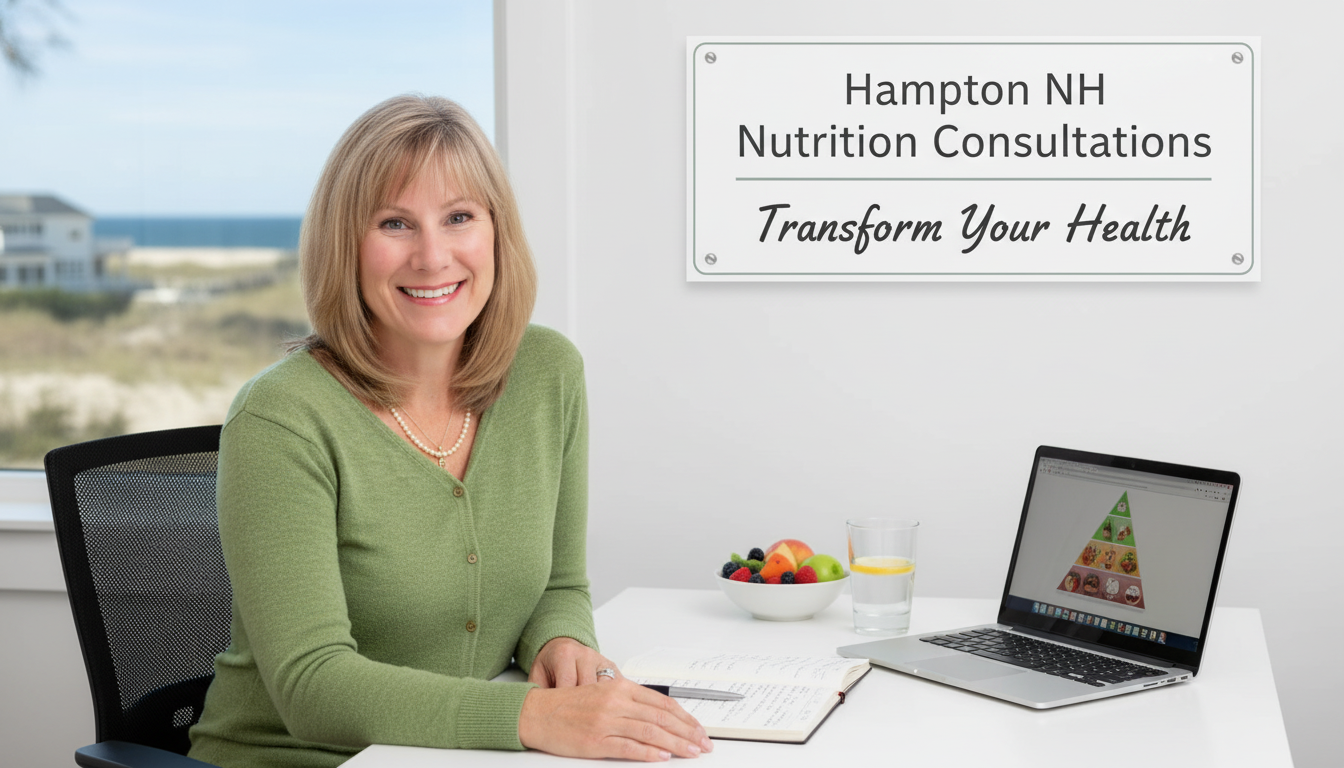
Most people have a rough sense of what they should be eating. More vegetables, less sugar, drink more water. You have probably heard it all before. But knowing and actually doing are two very different things and the gap between them is exactly where a registered dietitian steps in.
At Be Healthy NH, we work with people in the Hampton and Seacoast New Hampshire area who are tired of guessing. They have tried diets that did not stick, supplements that did not help, and advice that did not account for their real life. A one-on-one nutrition consultation changes that not because it is magic, but because it is specific to you.
This article walks through what actually happens in a nutrition consultation, who benefits most from them, and why working with a credentialed RD in your local community makes a meaningful difference.
What a Nutrition Consultation Actually Involves
A lot of people assume a nutrition appointment means being handed a meal plan and told what to eat. In reality, the first session looks much more like a conversation than a prescription.
We start by understanding your full picture your health history, your current eating patterns, your energy levels, any medications or supplements you are taking, and what your daily life actually looks like. A single mother working full-time in Portsmouth has very different needs than a retired couple in North Hampton trying to manage blood pressure. The plan has to fit the life.
From there, a first consultation typically covers:
- A detailed review of what you currently eat and drink, without judgment
- Your health goals, whether that is weight management, energy, digestion, hormone balance, or managing a chronic condition
- Any symptoms that might have a nutritional component, such as fatigue, bloating, brain fog, or poor sleep
- Your relationship with food, including any history of restriction or emotional eating
- Realistic steps you can take right away, before your next appointment
You leave with clarity, not a list of rules. The goal is always to give you tools you can actually use, not a rigid plan that falls apart the first time you have a busy week.
Why Generic Advice Only Gets You So Far
The internet has no shortage of nutrition advice. The problem is that most of it is written for a hypothetical average person who does not actually exist. Your body, your health history, and your lifestyle are not average so advice written for the masses rarely fits well.
Consider something as straightforward as fiber intake. General guidelines say adults should aim for around 25 to 38 grams per day. But if you have irritable bowel syndrome, jumping straight to that level could make your symptoms significantly worse. The type of fiber matters too. Soluble and insoluble fiber behave differently in the gut, and the right approach depends entirely on what is going on for you specifically.
The same applies to supplements. Magnesium is genuinely helpful for many people but the form you take, the dose, and the timing all affect whether you actually feel a difference. Taking the wrong form can cause digestive discomfort and nothing else. A registered dietitian helps you avoid that kind of wasted effort.
Who Benefits Most From Working With a Dietitian in Hampton NH
Nutrition consultations are not only for people with serious medical conditions. They are for anyone who wants to feel better and stop guessing at what will actually help. That said, there are certain situations where working with an RD makes a particularly clear difference:
Women navigating hormonal changes
From the menstrual cycle through pregnancy, postpartum recovery, and perimenopause, hormonal shifts have a direct effect on how the body uses nutrients. Many women in our practice come in feeling like their body has changed and nothing they try is working anymore. In many cases, it has changed and the nutrition approach needs to change with it.
People managing a chronic condition
Conditions like type 2 diabetes, high blood pressure, high cholesterol, thyroid dysfunction, and digestive disorders all have meaningful connections to food. Dietary changes are not a replacement for medical treatment, but they are often one of the most powerful tools available alongside it. We work closely with your existing care team to make sure nothing conflicts.
Anyone who has tried multiple diets without lasting results
If you have done keto, tried intermittent fasting, cut out gluten, gone vegan, or cycled through various programs and found yourself back at square one every time, that pattern is worth examining. Often the issue is not willpower it is that the approach was not designed for your body, your schedule, or your relationship with food.
People who want to use food and supplements more intentionally
You do not have to be unwell to benefit from better nutrition. Many of the people we see are already reasonably healthy and want to feel sharper, sleep better, have more energy, or simply know they are giving their body what it needs. That kind of preventive, proactive approach is something we genuinely enjoy working on.
The Difference Between an RD and a ‘Nutritionist’
This distinction matters more than most people realize. In New Hampshire, the title “nutritionist” is not legally protected. That means anyone can call themselves a nutritionist regardless of their education or training. A Registered Dietitian, by contrast, has completed an accredited four-year degree in nutrition science, a supervised clinical internship, a national board exam, and ongoing continuing education requirements.
That clinical training matters enormously when health conditions are involved. An RD can work alongside your physician, interpret lab work in a nutritional context, and flag situations where a dietary change might interact with medication. It is a different level of professional accountability.
At Be Healthy NH, Mary Sue Sanderson holds her RD and LD credentials and brings years of clinical and community nutrition experience to every session. She has particular depth working with women’s health through her role at the Gianna Family Health Center, supporting clients through the Creighton Model and all stages of reproductive and hormonal health.
What Makes a Local Dietitian Different From an Online Service
There are now dozens of apps and platforms that offer virtual nutrition coaching, often at a low monthly cost. For some people, that accessibility is genuinely useful. But there are real advantages to working with a local practitioner who is embedded in the same community you live in.
We know the Seacoast New Hampshire area well including which local farms sell produce through the growing season, which grocery stores stock the items we recommend, and what the winters here actually look like for sun exposure and vitamin D levels. That context shapes the advice in ways that an algorithm tuned to a national average cannot replicate.
There is also something important about continuity. When you work with the same practitioner over time, they know your history. They notice when something is not working and adjust. That ongoing relationship is hard to replicate through a subscription app.
What Happens After the First Appointment
Real change rarely happens in a single session. Most clients benefit from a series of appointments over several months, with the focus shifting as they make progress and run into new questions. The first appointment sets the direction. Follow-ups refine the approach based on what is actually working in your life.
Between appointments, clients often have questions come up a new supplement they have seen advertised, a change in how they are feeling, a social event that is making their eating plan harder to stick to. We make it easy to stay in touch and get answers without waiting for your next scheduled session.
The measure of success is not a perfect diet. It is whether you feel better, have more clarity about what your body needs, and have built habits that fit naturally into your actual life.
Ready to Get Started?
If you are in the Hampton, North Hampton, or wider Seacoast NH area and have been thinking about working with a registered dietitian, we would be glad to hear from you. You do not need to have a specific diagnosis or a dramatic goal to make an appointment worthwhile. Wanting to feel better is enough of a reason.
Be Healthy NH Nutrition Consultation Services
52 Lafayette Road, North Hampton, NH
admin@behealthynh.com
www.BeHealthyNH.com
Mary Sue Sanderson is a Registered Dietitian and Licensed Dietitian (RD, LD) based in North Hampton, NH. She specializes in women’s health, hormonal nutrition, and supplement guidance for the Seacoast New Hampshire community.
