Every year, thousands of people search online for government grants. Matthew Lesko’s LeskoHelp service claims to help find billions in free money. But, does it really deliver?
Our team looked into LeskoHelp’s legitimacy by checking the Better Business Bureau, state investigations, and real customer feedback. What we found is complex and important to consider before buying.
Who Is Matthew Lesko and What Is LeskoHelp?
Matthew Lesko is known as a government grant guru for over 20 years. He runs Matthew Lesko Information USA Inc. from Maryland. He made a name for himself by promising to help Americans find billions in government funding.
Lesko is easy to remember because of his bright suits and energetic ads. He sold millions of books to help people find government money. His books cover a wide range of needs.
The LeskoHelp website is his new project in finding grants. He claims to show funding sources that most people don’t know about. Lesko says he educates people about government and non-profit programs.
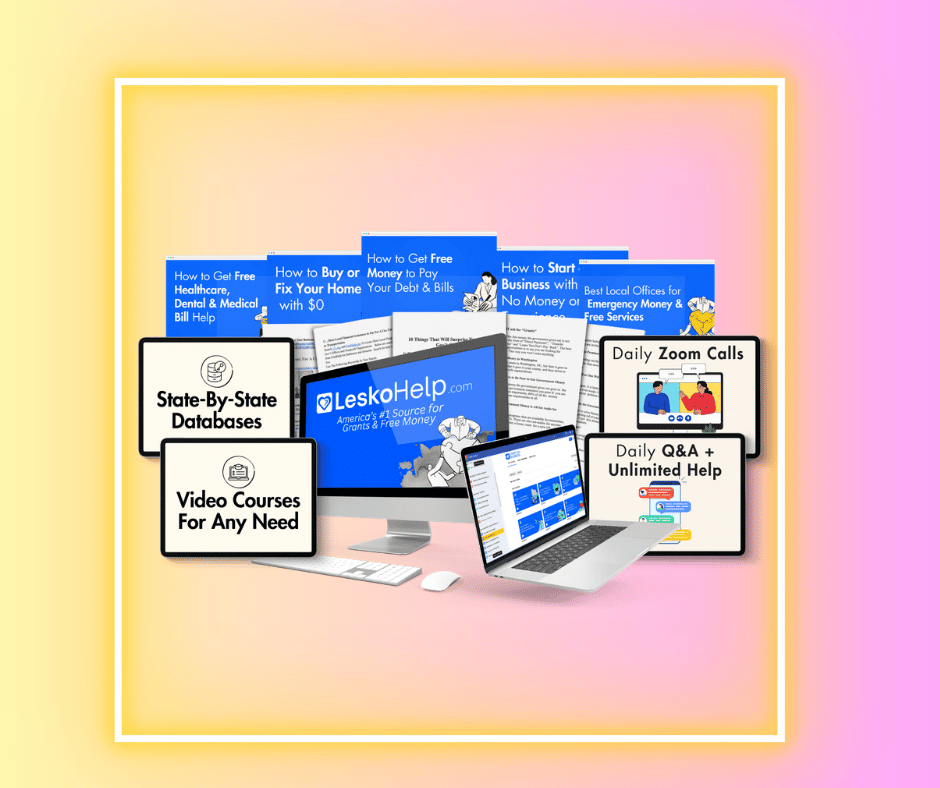
Lesko’s company makes money by selling guides, books, and online services. His work is seen as filling a gap in information. But, some doubt if his products offer real value or just repackage public info.
Lesko aims to help people find real government resources. But, how well he does this is a topic of debate. It also raises questions from regulators.
Visit Official LeskoHelp Website
How Does LeskoHelp Work?
To understand LeskoHelp, we need to look at its business model. It works by selling books and materials with data on government programs and funding. People interested in LeskoHelp start by buying these resources. These books act as directories, not application services.
Matthew Lesko books, like “Free Money to Pay Your Bills” ($37.95), are key products. They offer detailed info on government programs and funding sources. The books guide users to specific agencies and application processes. Unlike services that apply for customers, LeskoHelp users must navigate these steps themselves.
Users must review the information, find programs they qualify for, and contact agencies directly. LeskoHelp does not promise grant approval or handle applications. It’s an information provider, not an application service.
Lesko offers a 25-year refund policy for unhappy customers. This policy covers the books and materials. The company also sells or rents customer lists to other organizations. This means customers might get more marketing after their purchase.
| Product/Service Feature | Details | Consumer Responsibility |
|---|---|---|
| Matthew Lesko Books | Informational guides listing government programs and grants ($37.95) | Review materials and identify qualifying programs |
| Program Listings | Compiled directory of funding sources and agencies | Contact agencies directly for applications |
| Application Submission | Not provided by LeskoHelp | Submit applications independently to agencies |
| Refund Policy | 25-year customer satisfaction guarantee | Request refund if unsatisfied with purchase |
| Customer List Sharing | Lists sold to third-party organizations via brokers | Expect marketing from related services |
To use LeskoHelp well, you must know its limits. The materials are research tools, not complete solutions. Success comes from individual effort to explore programs, meet eligibility, and apply through government or private channels.
✅ See Latest Customer Reports On LeskoHelp – This May Change Your Mind
LeskoHelp Reviews: What Customers Are Really Saying
LeskoHelp customer reviews show a different side than the marketing claims. The Better Business Bureau’s Washington-area office has seen 85 formal complaints over 36 months against Information USA Inc., LeskoHelp’s company. This led to a low BBB rating for the company.
In 2002, BBB President Ed Johnson warned about LeskoHelp. Johnson said the service makes getting grants seem easy. But, in reality, customers face many challenges.
Mary Hoffman, from the Small Business Development Center at Adams State College in Colorado, gets many people looking for money. Hoffman is sad to tell them that her center offers free advice but no grants. She says many people spend a lot on books that don’t help them.
The difference between what LeskoHelp promises and what customers get is big. BBB complaints talk about false ads, hard-to-get grants, and programs not for everyone. Customers are often let down when they see what they really get.
| Complaint Category | Description | Customer Impact |
|---|---|---|
| Misleading Advertising | Marketing claims overstate ease of obtaining grants | Unrealistic expectations upon purchase |
| Inaccessible Programs | Promised grants not available to average consumers | Money spent without accessing benefits |
| Wild Goose Chases | Customers directed to nonprofits that don’t distribute grants | Wasted time and frustration |
| Content Mismatch | Actual book content differs from marketing promises | Reduced customer satisfaction and trust |
Lesko was asked about the BBB complaints and low rating. He said he didn’t know about them. But, the LeskoHelp customer reviews show a big gap between what’s promised and what’s delivered.
The $350 Billion Promise: Breaking Down the Claims
Matthew Lesko made a big promise: $350 billion in government grants for everyday Americans. He said it could help with credit card bills, living expenses, and debt. But, the reality is different.
The New York State Consumer Protection Board looked into this. They found most of the $350 billion is for programs like Medicaid and Medicare. These are not grants for personal use. They have strict rules for who can get them.
Lesko’s marketing was misleading, the board said. He made it seem like anyone could get this money. But, it’s not true.
Lesko’s ads often exaggerated. For example, he said a researcher got $500,000 for “traveling the world.” But, this was for a National Science Foundation grant, not for travel. Another claim was about “free car repairs” from government grants. But, these were actually from manufacturer recall programs.
Lesko’s ads also said to contact private agencies for grants. But, the board found these agencies mostly offer advice, not money.
| What Lesko Claims | What It Actually Represents | Reality for Average Consumers |
|---|---|---|
| $350 billion in available grants | Aggregate government spending on various programs | Most programs have strict eligibility requirements unrelated to consumer debt |
| Money to pay credit card bills | Medicaid and Medicare budgets | Not designed for personal debt elimination or bill payment assistance |
| Travel funding opportunities | Research grants for academic professionals | Competitive awards requiring specialized credentials and institutional affiliation |
| Free vehicle repairs | Manufacturer recall programs | Safety repairs only, not general maintenance or upgrades |
| Assistance from private agencies | Advisory services and referral organizations | Limited direct funding; many charge fees for information available free elsewhere |
It’s important to know the truth about government grants. They are for real needs, not just to help with personal debt. Misleading people about this can cause harm.
New York State Consumer Protection Board Investigation Findings
The New York State Consumer Protection Board looked into Matthew Lesko’s marketing. They found big issues with his claims. Teresa Santiago, the Board’s leader, said Lesko’s claim about $350 billion in government money is “simply not true.”
The Board acted as a fact-checker. They checked Lesko’s claims against what government programs really offer. They found Lesko’s claims were not true.
The Board said Lesko’s programs are for those who really need help, not for paying off credit card debt. Lesko makes money by telling people something that’s not true. His ads make people think they can get government money for personal use.
The investigation found more problems than just the $350 billion claim. Lesko said he was a New York Times columnist, but that’s not true. The New York Times asked him to take down this false claim in November.
Lesko did write for the New York Times Syndicate, but it was years ago. He stopped in 1994. This makes people question the truth of his other claims.
| Finding Category | Consumer Protection Board Investigation Results |
|---|---|
| Program Accessibility | Programs are entitlement-based with specific eligibility criteria, not open grants for general public use |
| Grant Availability Claims | The $350 billion promise is “simply not true” according to Teresa Santiago |
| Credential Verification | False claim about New York Times columnist status; Lesko wrote for NYT Syndicate but ended in 1994 |
| Profiting Method | Lesko profits from perpetuating false notions about government funding for personal debt relief |
| Agency Action | Findings referred to New York Attorney General’s office for possible legal action |
The Board’s findings were serious. They sent their report to the New York Attorney General’s office. This shows they think Lesko’s actions might need legal action. The investigation shows how Lesko’s business practices and claims are viewed by the government.
LeskoHelp Scam or Legit? Examining the Evidence
Is LeskoHelp a scam or a legit business? We need to look at different sources and what regulators say. The New York State Consumer Protection Board found something interesting. They said Matthew Lesko’s books are not scams because they actually have useful info about government and non-profit programs.
But, the board also noted that the ads for these books are full of wild exaggerations and false promises. People often don’t get the results they were promised. This makes it hard to say if the product is legit or if the marketing is the problem.
Matthew Lesko says his marketing is just trying to grab people’s attention. He thinks it’s like other ads out there. He also points out that his company offers a 25-year refund policy. He sees this as proof that his business is trustworthy and customers are confident in it.
Information USA Inc., the company behind Lesko, says it follows legitimate business practices because of this refund policy. Lesko wants to help people learn about government and non-profit programs.
| Factor | Assessment | Finding |
|---|---|---|
| Product Delivery | Books shipped to customers | Legitimate |
| Information Accuracy | Real programs listed with exaggerated claims | Mixed |
| Marketing Truthfulness | Regulatory findings of misleading advertising | Problematic |
| Customer Satisfaction | BBB complaints and poor ratings | Poor |
| Regulatory Scrutiny | State investigation and Attorney General involvement | Significant |
The facts show that LeskoHelp is a legal business selling useful products. But, its marketing has faced criticism for being misleading. It promises things that don’t always happen.
LeskoHelp Pricing and Refund Policy
LeskoHelp materials come with a price tag of $37.95 for the book “Free Money to Pay Your Bills.” This is a more affordable option compared to services that charge much more. It’s a good choice for those looking to find grants without spending a lot.
Matthew Lesko has a refund policy that’s been in place for over 25 years. He says, “We do not want anyone unhappy with one of our products.” This shows he cares about making customers happy. If you’re not happy, you can ask for your money back.
But, it’s important to think about the value you get. Much of what Lesko offers is also available for free. Websites like Grants.gov and USA.gov have all the information you need. Public libraries also offer free access to grant databases.
| Resource Type | Cost | Details |
|---|---|---|
| LeskoHelp Book | $37.95 book cost | Compiled grant information and resources |
| Government Websites | Free | Grants.gov, USA.gov, agency databases |
| Professional Grant Writing | $500–$5,000+ | Custom applications and professional preparation |
| Public Library Resources | Free | Grant databases and research assistance |
The $37.95 book might seem like a good deal at first. But, you should think if the information is worth the cost. Also, buying this book might lead to spending more money on other services from Lesko.
The Grant Industry Cottage Business and Related Scams
The New York State Consumer Protection Board has raised serious concerns. They say Matthew Lesko’s ads have fueled a cottage industry of grant scams. These scams range from misleading to outright fraud.
Lesko’s ads promise easy access to government grants, attracting millions. This large audience of hopefuls becomes a target for scammers and unethical operators.
Lesko’s company sells customer lists to other organizations. These lists include names of people interested in government grants. Companies like Grant Search Inc. and Grant PAC have faced trouble from federal regulators for their deceptive practices.
In July 2003, the FTC settled with Grant Search Inc. and Grant PAC. They were found to have falsely claimed easy access to grants. This case showed how grant scams target vulnerable consumers, making impossible promises for upfront fees.
Telemarketing fraud in the grant industry has become aggressive. Scammers claim guaranteed grant awards of $8,000 to $25,000. They demand upfront fees of $257 or more before providing grant information. Some telemarketers make outlandish claims, like the U.S. government giving away 1.5 trillion dollars in grants in a year.
| Scam Type | Typical Promise | Required Upfront Fee | Actual Outcome |
|---|---|---|---|
| Grant Matching Services | Easy grants from charitable foundations | $200-$400 | No grants obtained |
| Telemarketing Fraud | Guaranteed $8,000-$25,000 grants | $257 or more | Money lost, no grant access |
| List-Based Operations | Pre-selected grant eligibility | $150-$500 | Consumer targeting for future scams |
| Government Impersonation | Official government grant notifications | Processing or activation fees | Identity theft or financial loss |
The grant industry includes everything from questionable marketing to clear fraud. Knowing this helps consumers spot scams. If someone asks for upfront fees for guaranteed grants, it’s a red flag. The FTC’s actions against these companies teach us how to avoid these scams.
✅ Claim Your LeskoHelp Discount NOW ! Its a Limited Time Offer!!
Conclusion
Our look into LeskoHelp reviews and Matthew Lesko’s services shows a business that’s legal but uses misleading marketing. The New York State Consumer Protection Board said, “Wearing a wild suit may be good marketing. But making wild, misleading claims about government grants is bad business.” This sums up the main issue for people thinking about buying Lesko’s materials.
The difference between what Lesko promises and what you get is huge. He advertises that you can easily get billions in grant money for credit cards and living expenses. But what you really get is a list of government programs. These programs have strict rules that you have to figure out yourself. The 85 Better Business Bureau complaints and low rating show how many people are unhappy.
To protect yourself and make smart choices, start with free government resources. Sites like Grants.gov and USA.gov offer the same info as Lesko’s books for free. Remember, real government grants need specific qualifications and a competitive application process. No book can magically get you grant money. Be careful of follow-up offers from companies that might have bought your contact info.
LeskoHelp reviews show most people would do better with free resources and realistic hopes about government help. While Lesko’s materials aren’t the worst scams, there are better options out there. Our goal is to give you clear reviews to help you choose what’s best for you.
