
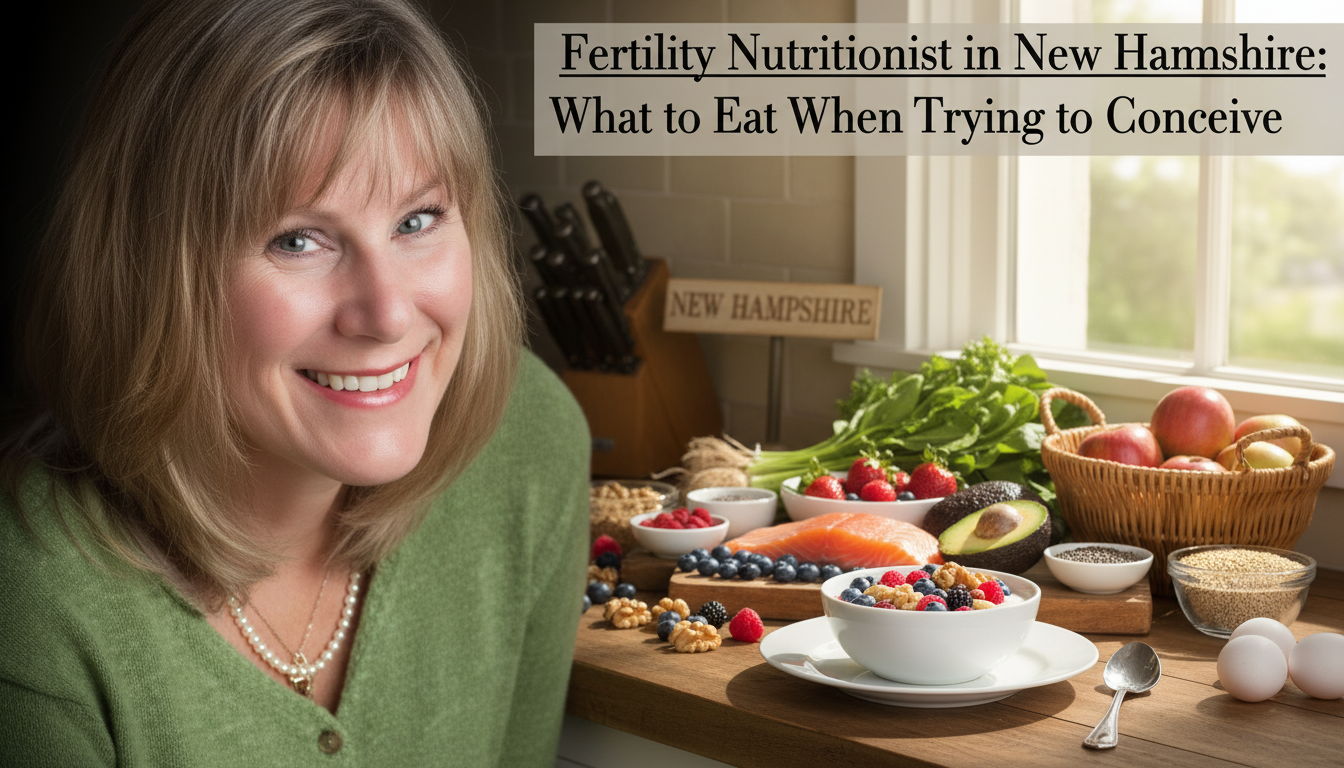
If you are trying to conceive and wondering whether what you eat actually makes a difference, the answer is yes. As a registered dietitian in North Hampton, NH who works closely with women at every stage of their reproductive health journey, nutrition is one of the most powerful and overlooked tools available to women who want to support their fertility naturally.
This article covers the foods, nutrients, and supplements that research supports for women trying to get pregnant, along with what to avoid and when it makes sense to work with a fertility nutritionist in New Hampshire.
Why Nutrition Matters for Fertility
Your body needs a steady supply of specific vitamins, minerals, and macronutrients to regulate hormones, support healthy ovulation, and create the right environment for conception and early pregnancy. When nutritional gaps exist, the whole system can be affected. Research published in a 2026 study using national health survey data found that women reporting infertility had lower usual intakes of key nutrients including folate, choline, zinc, selenium, iron, omega-3 fatty acids, and magnesium compared to women without fertility challenges.
The good news is that dietary changes can have a meaningful impact, often within three months. Egg development takes roughly 90 days, which means the nutritional choices you make today are directly influencing the eggs that will be available to you three months from now.
The Fertility Diet: What to Focus On
Research consistently points to a Mediterranean-style eating pattern as one of the most fertility-supportive approaches available. A large study of over 17,000 women found that a pro-fertility diet centered on whole foods, plant protein, healthy fats, and low glycemic index carbohydrates was associated with a lower risk of infertility caused by ovulation disorders.
Here is what that looks like on a practical level.
Healthy Fats
Fat is not the enemy when it comes to fertility. Omega-3 fatty acids in particular play a critical role in hormone production, reducing inflammation, and supporting egg quality. Research indicates that omega-3 fatty acids from oily fish and supplements are linked to better egg maturation, a reduced risk of anovulation, and higher progesterone levels.
Prioritize these fat sources:
- Salmon and sardines (low mercury, high omega-3)
- Walnuts, which also provide vitamin E to support egg health
- Avocado and extra virgin olive oil
- Flaxseeds and chia seeds
Plant-Based Protein
Swapping some animal protein for plant protein has been linked in multiple studies to better ovulatory function. Beans, lentils, chickpeas, and tofu are excellent options. Beans and lentils are also rich in folate and a compound called spermidine, which research has positively associated with fertility outcomes.
Full-Fat Dairy
This one surprises many of my clients. Evidence suggests that full-fat dairy products are associated with a lower risk of ovulatory infertility in women. Full-fat dairy provides vitamins A, D, and E along with calcium and beneficial fatty acids. Switching from low-fat to full-fat dairy is one of the simplest adjustments women trying to conceive can make.
Iron-Rich Foods
Iron deficiency is common among women of reproductive age and is linked to ovulatory infertility. A long-term study of more than 18,000 women found that supplementing with iron was associated with a reduced risk of ovulatory infertility. Food sources of iron include leafy greens, beans, lentils, red meat in moderation, and fortified cereals. Pairing iron-rich plant foods with vitamin C improves absorption significantly.
Antioxidant-Rich Vegetables and Fruits
Oxidative stress can negatively affect egg quality and overall reproductive function. Loading your diet with colorful vegetables and fruits helps neutralize free radicals. Tomatoes are worth highlighting specifically because they contain lycopene, a compound shown to support reproductive health. Cooking tomatoes actually increases their lycopene content.
Key Nutrients and Supplements for Fertility
Even a well-planned diet can leave gaps. Here are the nutrients I pay closest attention to with fertility clients in my North Hampton practice.
Folate (Methylfolate)
This is the single most important nutrient for women trying to conceive. Folate supports DNA synthesis and is critical for preventing neural tube defects in early pregnancy, often before a woman even knows she is pregnant. The preferred form is methylfolate rather than standard folic acid, as it is the active form the body can use most efficiently. Most women should begin supplementing at least three months before trying to conceive.
Vitamin D
Vitamin D receptors are present in reproductive tissues, and research links adequate vitamin D levels to better hormonal balance and improved fertility outcomes. As I covered in a separate article on vitamin D deficiency in New Hampshire, our northern latitude means most residents are not getting enough from sunlight for a significant portion of the year. Getting tested and supplementing appropriately is a practical priority for NH women trying to conceive.
CoQ10
Coenzyme Q10 is an antioxidant naturally produced by the body that plays a central role in cellular energy production. It has a well-studied track record for supporting egg quality, particularly for women over 35 or those with diminished ovarian reserve. Typical doses studied range from 100 to 600 mg daily, and it is worth discussing dosing with a dietitian or physician based on your individual situation.
Omega-3 Fish Oil
If you are not eating fatty fish at least twice a week, a high-quality fish oil supplement is worth considering. Omega-3 supplementation has been associated with improved reproductive outcomes and is one of the most consistently supported fertility supplements in the research literature.
Iron
Testing your ferritin level before supplementing with iron is important, since too much iron can be harmful. If your ferritin is low or borderline, bringing it into a healthy range is a worthwhile fertility intervention.
Inositol
For women with PCOS or irregular cycles, inositol has some of the strongest evidence of any fertility supplement. Research shows it supports ovarian function, improves insulin sensitivity, and is associated with better clinical pregnancy rates in women undergoing ovulation induction. Myo-inositol and D-chiro-inositol are the two forms most studied.
What to Reduce or Avoid
Nutrition for fertility is not only about what you add. Certain dietary patterns and substances are worth pulling back on when you are trying to conceive.
- Trans fats, found in heavily processed snack foods and some fried foods, are directly linked to increased ovulatory infertility risk
- High sugar intake and refined carbohydrates can disrupt insulin levels and hormone balance, particularly for women with PCOS
- Excessive caffeine has been associated with reduced fertility in both men and women
- Alcohol consumption is best minimized during the preconception period
- High-mercury fish such as swordfish, shark, king mackerel, and tilefish should be avoided since mercury can disrupt hormonal cycles and reduce fertility
When to Start Thinking About Fertility Nutrition
Ideally, fertility nutrition planning begins at least three months before you start trying to conceive. This gives your body time to build nutrient stores, address any deficiencies, and optimize the egg development cycle. If you have been trying to conceive for several months without success, a nutritional assessment is a practical and non-invasive first step worth taking before moving on to more intensive interventions.
Women with PCOS, endometriosis, irregular cycles, or a history of miscarriage may benefit especially from working with a registered dietitian who understands how nutrition intersects with hormonal health.
Working With a Fertility Nutritionist in New Hampshire
Fertility nutrition is not one-size-fits-all. The right supplements, portion sizes, and dietary adjustments depend on your hormone levels, health history, cycle regularity, and personal health goals. What works well for one woman may not be the right approach for another.
In my practice at BeHealthyNH, I work with women in the Seacoast NH area to create personalized nutrition plans that support their reproductive goals, whether that means optimizing a natural conception attempt, preparing for IVF, or simply building a stronger nutritional foundation before pregnancy.
Sessions are available in-person at 52 Lafayette Road in North Hampton, NH or virtually for clients who prefer to meet online.
Be Healthy NH – Nutrition Consultation Services
52 Lafayette Road, North Hampton, NH
admin@behealthynh.com
www.BeHealthyNH.com
Mary Sue Sanderson is a Registered Dietitian and Licensed Dietitian (RD, LD) based in North Hampton, NH. She specializes in women’s health, hormonal nutrition, and supplement guidance for the Seacoast New Hampshire community.
